
Women In Wine | A Q&A with Lisa Jenkins
During our recent visit to Gippsland, we had the pleasure of visiting some incredible producers, including Fleet Wines. We sat down with owner and producer Lisa Jenkins to talk about what the wine industry means to her.
Lisa Jenkins of Fleet Wines is a dynamic force in the Gippsland wine community whose journey from Melbourne hospitality to boutique winemaking reflects both passion and precision. With a background as a qualified chef, sommelier, wine show judge and holder of the demanding WSET Diploma, Lisa brings a finely tuned palate and deep technical expertise to every wine she crafts. In 2016 she and her partner Justin returned to South Gippsland to establish Fleet Wines, where their small-batch, limited-release wines capture the flavour, texture and vibrancy of place while honouring sustainable practices and the land they call home.
What first drew you to winemaking, and when did you know it was the right path for you?
Wine was always there in the background of my hospitality career. As a chef and sommelier in Melbourne, I was constantly surrounded by it, tasting, pairing, talking about it. But what truly drew me in was the way wine connects people to place. It’s agricultural, creative and deeply sensory all at once.
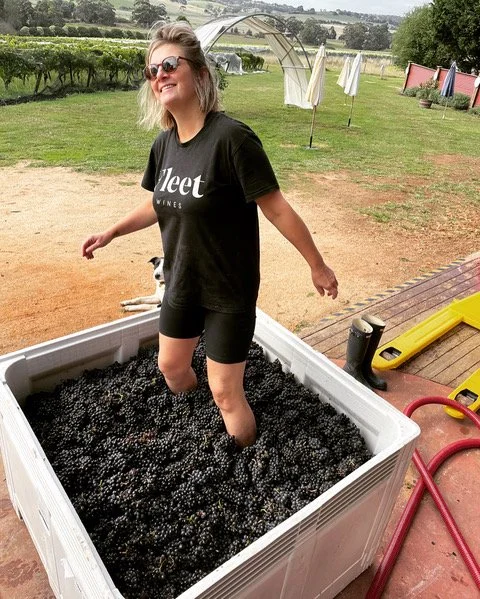
The shift from appreciation to production happened gradually. Studying for my WSET Diploma really deepened my technical understanding, and judging at wine shows sharpened my palate and perspective. But I knew it was the right path when Justin and I returned to South Gippsland in 2016 to establish Fleet Wines. Working hands-on with fruit, making decisions that would shape the wine’s texture and structure, and seeing a finished wine reflect a season and a site, that felt incredibly grounding. It still does.
Who were some of your early mentors or influences?
My early influences came from hospitality. Working alongside thoughtful chefs and sommeliers taught me discipline, curiosity and the importance of detail. That environment shaped how I approach wine, with balance, texture and harmony always in mind.
Through formal study and wine judging, I was also fortunate to taste widely and learn from experienced winemakers across Australia. Those opportunities exposed me to different philosophies from minimal intervention to more classical approaches and helped me form my own style. Ultimately though, some of my greatest teachers have been the vineyards themselves. Every season humbles you and teaches you something new.
Have you seen the role of women in the wine industry change over the course of your career?
Absolutely. There’s been a noticeable and positive shift. When I first started in wine, particularly in production and judging spaces, women were present but underrepresented. Now there’s far more visibility, leadership and support networks for women across all areas from vineyard management to winemaking, distribution and ownership.
There’s still work to do, but the narrative has changed. Women are no longer seen as the exception. We’re shaping styles, running businesses and influencing the broader conversation around sustainability and site expression. That’s powerful.
What advice would you give to young women considering a career in wine?
Back yourself. Wine can be technical and physically demanding, but it’s also creative, intellectual and incredibly rewarding. Build a strong foundation whether that’s through study, hands-on cellar work, hospitality or all three and don’t be afraid to ask questions.
Find mentors, taste widely and stay curious. Most importantly, trust your palate and your perspective. The industry benefits from diverse voices and experiences, and there is space for you here.
Lastly, if you were a grape varietal, which would you be?
I’d probably be Riesling.
Precise, textural and quietly powerful, structured but expressive. It can be delicate and floral one moment, then deeply mineral and driven the next. It’s a variety that reflects place so clearly and evolves beautifully over time. I love that combination of restraint and longevity.